
How to Celebrate Sukkot at Home: A Low-Stress Guide for Busy Humans (Even Without a Backyard)
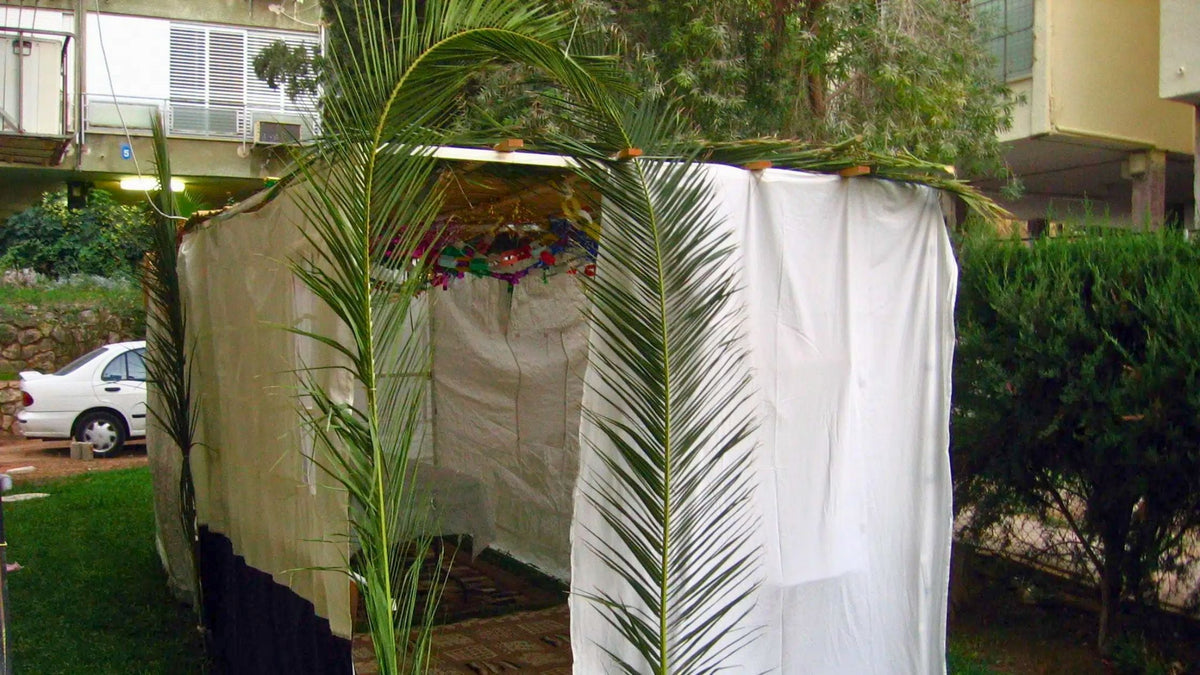
The Joy in the Wobble: Why Sukkot Is the Holiday We Need
We just made it through Yom Kippur. You are likely exhausted, still digesting break-fast, and looking at the Jewish calendar with a sudden jolt of reality: Wait, Sukkot starts next week?!
If you feel a wave of holiday fatigue washing over you, take a deep breath. Sukkot is fundamentally known as Z'man Simchatenu, the Season of Our Joy. It is not meant to be a high-stress endurance test or a rabbinic treaty on architecture. Sukkot is about "beautiful impermanence": stepping into temporary shelters, leaning into life's wobbles, and choosing gratitude, hospitality, and warmth despite life's fragility. Most importantly: there is zero room for guilt, shame, or perfectionism here.
I get the holiday panic. A few years ago, I was living in a tiny 4th-floor apartment in New York City. September in Manhattan meant 47-degree evenings that felt like a biting 30 degrees once the wind whipped down the avenue between buildings. I had zero backyard, zero balcony, and zero physical space for a 10-foot wooden hut.
My Sukkot ritual back then? I would walk over to the Chabad sukkah and lulav station in Madison Square Park (now at Fifth Av) to fulfill the mitzvah and shake the four species, then head back to my apartment, crack open the living room window to let the crisp autumn air in, bundle up, sip hot tea while looking up at the stars, and call it a win.
Now that I live in Kansas City, my setup has evolved (and if you happen to be local in KC, Chabad Overland Park & Leawood sells complete, beautiful lulav and etrog sets for $70!). But whether you are in a Manhattan high-rise, a midwestern suburban house, or somewhere in between, the core rule of Sukkot remains identical: Do what you can with what you've got.

What Is Sukkot? The Feast of Booths Explained
Sukkot (pronounced soo-KOAT, Hebrew for "booths" or "huts") is a seven-day biblical Jewish holiday (eight or nine days outside Israel) that begins on the 15th day of the Hebrew month of Tishrei (sundown on Friday, September 25, 2026 for most of us). Known in English as the Feast of Booths or Feast of Tabernacles, it commemorates both the agricultural harvest in ancient Israel and the 40-year journey of the Israelites through the desert, where they dwelt in temporary shelters protected by divine providence.[1]
Coming just five days after the intense solemnity of Yom Kippur, Sukkot is marked by two primary religious obligations: dwelling in a temporary hut called a sukkah, and waving four specific botanical species known as the Arba Minim (the lulav and etrog set). It is a holiday designed to pull us out of our sturdy brick-and-mortar comfort zones and remind us that true security comes from connection, community, and trust.
The Sukkah Situation: How to Dwell Outdoor-ish (Even Without a Backyard)
The central mitzvah of the holiday is dwelling in a sukkah, a temporary outdoor booth topped with organic shade (schach) like palm fronds, bamboo mats, or evergreen branches, constructed so that daytime brings shade and nighttime reveals the stars.[2]
If you don't have a sprawling suburban backyard, do not fret. Here is how real people make it work in modern life:
- The Sukkah Kit / DIY: If you have a yard, patio, or driveway, prefabricated metal-pipe sukkah kits go up in about 30 minutes without a single nail or power tool.
- The Budget / Apartment Hack: Pop-up sukkahs or DIYing an outdoor pop-up shower tent topped with valid foliage can give you a valid, personal shelter for under $50.
- Balconies & Roofs: If you have an outdoor balcony with open sky directly above it (no upstairs neighbor's balcony blocking you), you've got a sukkah spot.
- Public Sukkahs: Kosher delis, synagogues, Chabad houses, and JCCs set up public sukkahs where anyone can walk in, make a blessing, and eat lunch.
- The Open-Window Method: If you have no outdoor access at all, sit near an open window, feel the crisp breeze, decorate your dining table, and focus on the holiday's themes of gratitude and impermanence.

Sukkot is about joy, not suffering. If it is pouring rain, dangerously windy, or freezing cold, Jewish law explicitly excuses you from sitting outside. Eat your festive meal warm inside!
The Four Species: Lulav and Etrog Without the Stress
The second core ritual involves taking the Arba Minim (Four Species):
- Lulav (Date palm frond)
- Hadasim (Three myrtle branches)
- Aravot (Two willow branches)
- Etrog (Citron fruit)
You wave them together in six directions (east, south, west, north, up, down) to celebrate unity, nature, and divine presence across the physical world.[3]
You do not need to spend a fortune to participate. You can:
- Buy Locally: Check with your local synagogue or Chabad (around $70).
- Borrow from a Friend: Neighborly sharing is a huge part of Sukkot tradition. On the first day, communities use a legal custom called "a gift on condition of return" so you legally own the set during your blessing.
- Visit a Public Station: Community centers, campus Hillels, and Chabad street stations (like the one on 5th Av) make sets available for anyone to drop by and shake.
Pro-Tip: If you borrow someone's etrog, handle it with extreme gentleness around the pitom (the small stem at the top tip). If the pitom snaps off, it can render the etrog invalid for ritual use!
Low-Energy Meals, Challah Hacks, and Cozy Sukkah Nights
Hosting during Sukkot does not require multi-course caterers or exhausting kitchen shifts.
- The Challah Hack: "Challah" for festive holiday meals does not have to be an elaborate 6-strand braided loaf. Any unsliced bakery loaf, French baguette, or unsliced dinner roll fulfills the requirement for Motzi. (Ever wondered why Challah is braided, btw?)
- Micro-Meals: Plan just one special meal per day or order takeout right into your sukkah or open-window dining nook. Killer Falafel recipe here.
- Cozy Autumn Style: Sukkahs aren't insulated, so fall evenings get chilly fast. Layer up in a thick Chosen and Crushing It Sweatshirt or an embroidered Sweatshirt, pull on a soft Star of David Heart Beanie, pour hot cider into a Cartoon Challah Mug, and enjoy the night air.
Bringing the Vibe Inside: Decor and Ushpizin (Spiritual Guests)
Paper Chains & Fall Flair: Paper chains, hanging plastic fruit, and kids' artwork bring instant warmth. If hanging decorations outside, laminate them or wrap them in clear contact paper to survive autumn dew!
Ushpizin (Inviting Spiritual Guests): There is an ancient mystical custom of symbolically inviting spiritual guests into the sukkah each night (traditionally biblical leaders like Abraham, Sarah, Moses, and Miriam).[4] You can personalize this at your table by "inviting" personal mentors, ancestors, or modern heroes, and discussing what their lives teach us about resilience.
The 6-Step Sukkot Game Plan for Modern Life
- Pick your sukkah spot: Backyard kit, balcony, pop-up tent, open window, or a plan to visit a local public sukkah.
- Lock in a Lulav strategy: Order a local set, borrow from a friend, or visit a community station.
- Simplify your food: Plan one simple festive meal per day (takeout counts!).
- Prep for cold weather: Keep extra blankets and warm hoodies on hand.
- Set your hospitality vibe: Decide who you're inviting to your table (physically or symbolically).
- Schedule micro-moments: Put a 10-minute tea break under the night sky on your calendar right now.
A Prose Glossary of Essential Terms
To navigate Sukkot with ease, a quick vocabulary guide helps:
Sukkah — סֻכָּה — SOO-kah. The temporary outdoor booth or hut built for the Sukkot festival, featuring at least three walls and an organic thatch roof open to the stars.
Schach — סְכָךְ — SKHACH. The natural, organic roofing material used on a sukkah, such as cut palm fronds, bamboo poles, or evergreen boughs. Must be detached from the ground.
Lulav — לוּלָב — LOO-lahv. The ripe green date palm frond that forms the central spine of the Four Species set, bound together with myrtle and willow branches.
Etrog — אֶתְרוֹג — ET-rohg (Hebrew) / ES-rohg (Yiddish). The fragrant yellow citron fruit held alongside the lulav during blessings and waves.
Arba Minim — אַרְבַּעַת הַמִּינִים — Ar-BAH-at ha-mee-NEEM. The Hebrew term for the "Four Species" (Lulav, Etrog, Hadasim, and Aravot) taken together during Sukkot services.
Ushpizin — אוּשְׁפִּיזִין — Oosh-pee-ZEEN. An Aramaic word meaning "guests," referring to the mystical tradition of inviting ancestral and biblical figures into the sukkah each evening.
Chol HaMoed — חוֹל הַמּוֹעֵד — KHOLE ha-moe-ED. The intermediate festival days between the opening and closing holy days of Sukkot, where work is permitted but festive routines continue.
Simchat Torah — שִׂמְחַת תּוֹרָה — Seem-KHAT Toe-RAH. The joyous holiday immediately following Sukkot, celebrating the completion and immediate restarting of the annual Torah reading cycle.
Frequently Asked Questions About Sukkot
There are no stupid questions here. Whether you've built 30 sukkahs or you just Googled "what is Sukkot" ten minutes ago, we've got you covered.
What is Sukkot?
Sukkot is a seven-day Jewish holiday commemorating the 40-year desert wanderings of the Israelites and celebrating the autumn harvest. It is observed by dwelling in temporary huts called sukkahs and waving four agricultural species (lulav and etrog).
When is Sukkot celebrated?
Sukkot begins on the 15th day of the Hebrew month of Tishrei, which typically falls in late September or October. It lasts for seven days, followed immediately by Shemini Atzeret and Simchat Torah.
What is the Feast of Booths?
"Feast of Booths" (or Feast of Tabernacles) is the English translation of Sukkot. The name comes from the temporary booths (sukkahs) that Jews build and live in during the holiday week.
How is Sukkot celebrated today?
Modern Sukkot is celebrated by eating meals in a sukkah, waving the lulav and etrog, hosting friends and family, decorating huts with fall greenery and paper chains, and reflecting on gratitude and impermanence.
How do you pronounce Sukkot?
In modern Hebrew, it is pronounced soo-KOAT. In Ashkenazi Yiddish tradition, it is pronounced SOO-kiss (often spelled Succos or Succot).
What is a sukkah?
A sukkah is a temporary outdoor hut built specifically for Sukkot. It must have at least two and a half or three walls and a roof made of natural vegetation (schach) that provides shade while allowing stars to be seen at night.
What are the Four Species (Arba Minim)?
The Four Species are four plants commanded in the Torah for Sukkot: a palm frond (lulav), citron fruit (etrog), myrtle branches (hadasim), and willow branches (aravot).
Sukkot is about seeing
There is a reason Sukkot comes immediately after Yom Kippur. On Yom Kippur, we strip away all physical distractions to focus on the soul. Five days later, Sukkot throws us right back into the physical world, into the autumn air, the smell of palm fronds, the taste of warm bread, and the laughter of guests around a wobbly wooden table.
The sukkah reminds us that life is inherently fragile, wobbly, and temporary. But resilience isn't pretending that things are indestructible; resilience is choosing trust, hospitality, and joy right in the middle of the wobble.
Whether you're eating dinner in a full backyard sukkah kit, sipping hot tea by an open apartment window in NYC, Paris or London, or shaking a borrowed lulav in a Midwestern town, you are part of a 3,000-year-old tradition of bringing light into temporary spaces.
Looking to stay warm while dwelling under the stars this Sukkot? Check out JewishSwagShop.com for cozy, proud Jewish hoodies, beanies, mugs, and apparel made for real life.